
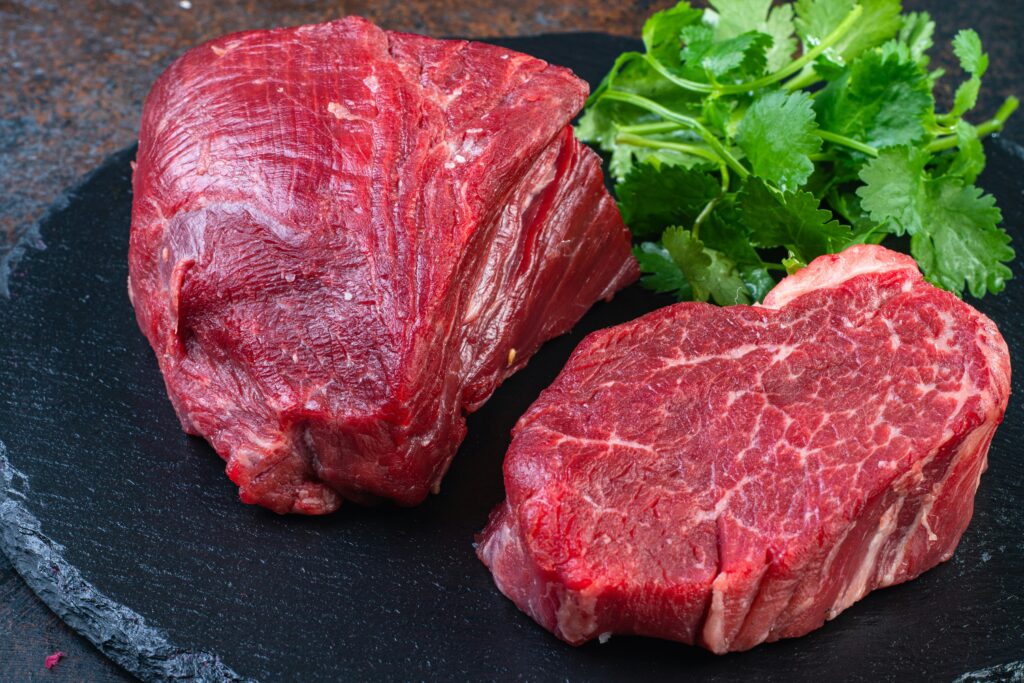
Choosing the right type of meat has become a more important decision than ever, especially with the variety of options in Saudi markets—from fresh meat, chilled, to frozen meat. Despite the multiple alternatives, Saudi consumers still clearly lean toward fresh meat, whether for daily use or special occasions. But why? And is this preference based on scientific facts? This article provides you with a comprehensive, practical, and easy-to-understand guide to distinguish between fresh and frozen, and how to choose high-quality meat that suits your recipes and budget.
Many people think the difference is limited to “cold meat” and “frozen meat,” but the difference is deeper than that and directly affects flavor, texture, tenderness, and nutritional value.
This is meat that is slaughtered then chilled within hours, and stored between 0° and 4°, without any freezing process.
Its advantages:
Usually frozen quickly after slaughter and stored at -18° or lower.
Its advantages:
There are four strong reasons that make Saudi consumers lean toward fresh meat, clearly evident in purchasing behavior within the Kingdom:
Popular Saudi dishes such as:
Rely heavily on the original flavor of meat, which is affected by freezing. Fresh meat preserves fat and juices, which reflects on the quality of the dish.
Saudis care greatly about meat quality on occasions, especially:
Therefore, the greatest reliance is on fresh lamb or fresh veal to ensure the highest quality.
When meat is fresh and from a trusted source—as in Kuzu Meat products—the sense of confidence increases in:
Grilled meats are an essential part of Saudi cuisine. The high tenderness in fresh meat gives it better results during grilling compared to frozen meat which may become tough after thawing.
It’s not true that frozen meat is always bad. There are cases where frozen meat is a very good option, such as:
But you must ensure that freezing was done directly in the country of origin in the correct way. The problem is not in “freezing itself,” but in:
These errors affect quality.
Here are the most important criteria to look for when buying fresh meat—these are internationally and locally approved criteria:
The smell should be:
Press with your finger:
If the meat returns to its shape quickly, this means it’s fresh.
White or creamy fat means:
Saudi customers prefer:
And it’s important that the slaughter is 100% halal, which is provided by specialized supply companies like Kuzu Meat.
Many confuse “fresh” and “chilled.” The truth is that chilled meat is not frozen at all. It’s only chilled to preserve quality.
| Type | Temperature | Shelf Life | Tenderness | Suitable for |
|---|---|---|---|---|
| Fresh | 0°–4° | 1–3 days | Highest | Quick cooking and grilling |
| Chilled | 0°–4° | 7–14 days | Excellent | Most dishes |
| Frozen | -18° | 6–12 months | Lower | Stews and broths |
Chilled meats, if from a trusted source, are considered an excellent option because they combine:
Nutritional studies prove that:
However, frozen meat remains nutritionally excellent if handled correctly.
1) Store it in the refrigerator for only 1–2 days
2) If you want to freeze it, use vacuum bags
3) Write the freezing date on each bag
4) Don’t wash the meat before storage
5) Leave space between pieces to ensure even cooling
Yes — in most uses, it’s worth the price difference because of:
But…
If you want:
Then frozen might be an excellent option.
Fresh offers:
But frozen offers:
The choice depends on your needs, but the golden advice for Saudi cuisine:
For traditional Saudi recipes—always choose fresh.
But if the goal is storage or long-cooking dishes, frozen is a practical option.