Choosing fresh meat is an essential step to getting a delicious and healthy meal. Many people face difficulty distinguishing between fresh meat and meat that has lost its quality, so we’ll provide you with a practical guide in this article to help you choose the best meat with ease.
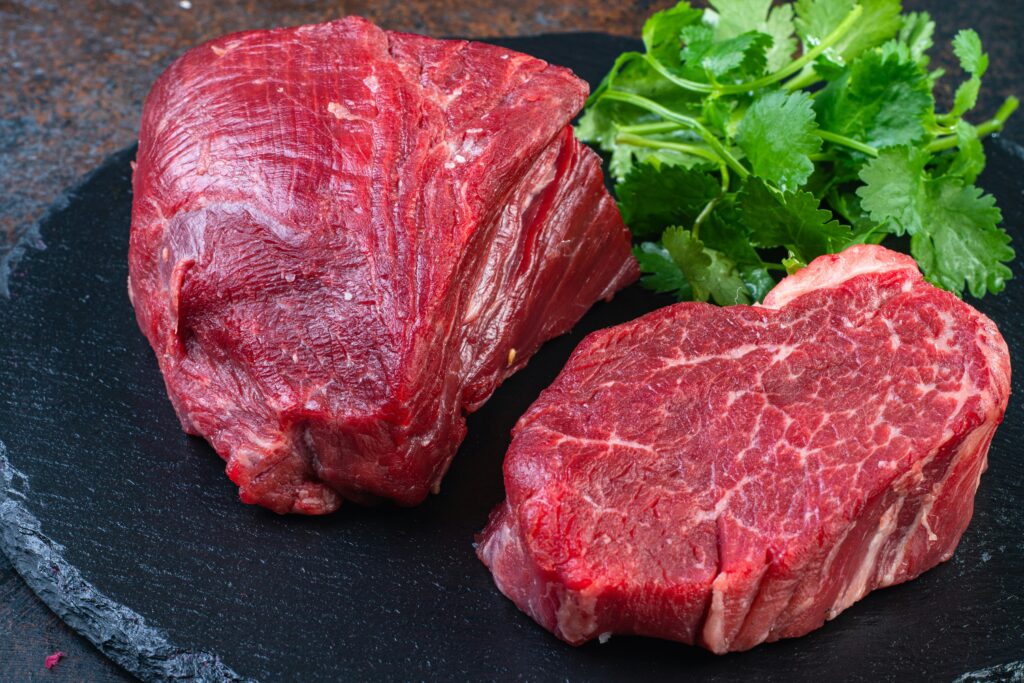
Color is one of the most important indicators of meat quality.
Lamb: Light red or pink color, with a white fat layer.
Veal: Pink with a reddish tint, and should be shiny.
Beef: Should be a natural red, not too dark.
If you notice the color is pale or grayish, this indicates the meat is old or has been exposed to air for too long.
Fresh meat has a very mild, almost nonexistent smell.
Strong or sour odors are a clear sign that the meat is not safe to eat.
Make sure to press your finger on the piece of meat:
If the texture returns to normal quickly → the meat is fresh.
If the mark remains visible → the meat is old and losing its juices.
If the texture is slimy → stay away from it immediately.
Fat should be white or cream-colored, not yellowish.
The better the fat is distributed throughout the tissue (marbled), the more tender and higher quality the meat will be.
Not all frozen meat is bad, but when buying:
Make sure there’s no excess ice inside the package.
Avoid pieces that have changed color.
Check the slaughter and freezing dates.
Buy from trusted and specialized places.
Avoid buying meat displayed at inappropriate temperatures.
Choose meat cuts suitable for your cooking method (grilling – cooking – boiling).
Choosing fresh meat is a simple but necessary skill. By following these guidelines, you’ll ensure you get the best quality and most delicious taste. Don’t hesitate to check our upcoming articles to learn the ideal cooking methods for each type of meat.